


7 May 2026
The quiet cost of poor customer communications in 2026
You could be losing business before the conversation even starts.
Most SMBs think they have a clear picture of why they win business. Far fewer know why they lose it. And one of the most underestimated reasons sits in plain sight: how easy – or not – it is for customers to reach you.
The answer is rarely dramatic. It's a missed call on a busy Monday. A voicemail that never gets a callback. A customer who didn't leave a message – because they'd already moved on.
That is the quietest way to lose revenue.
First contact is your highest-converting moment.
It’s easy to forget that every inbound inquiry is effectively a person trying to give you money. They’ve decided you’re worth the conversation and reached out. Whatever happens in the next thirty seconds either confirms that – or quietly ends it.
These aren’t casual inquiries. They’re high-intent buyers, ready to spend.

Businesses work hard to win attention. The real opportunity is making sure that attention does not disappear the moment someone tries to get in touch.
How much are you actually losing?
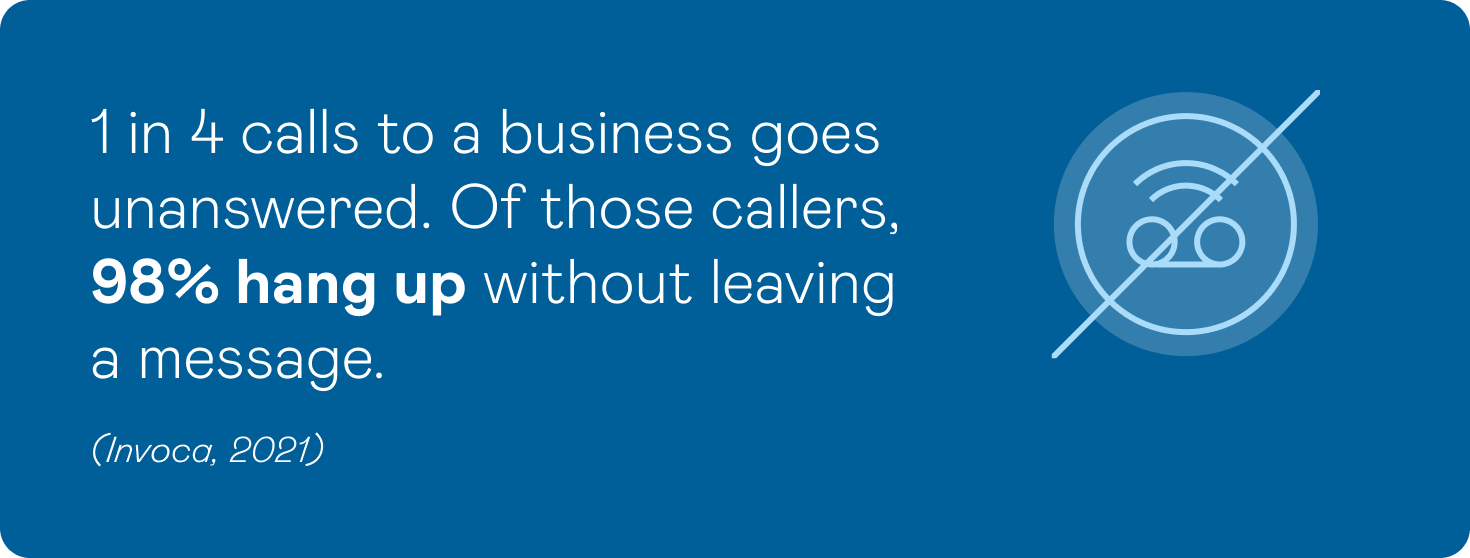
They don’t try again later. They don’t send an email. They go to Google, find the next option, and contact them instead.
Take a car mechanic in Dallas who misses three calls on a busy Monday morning because the team is already flat out. One caller needs an urgent repair. They don’t leave a message. They contact the next garage on Google. The opportunity is gone before anyone noticed it arrived.
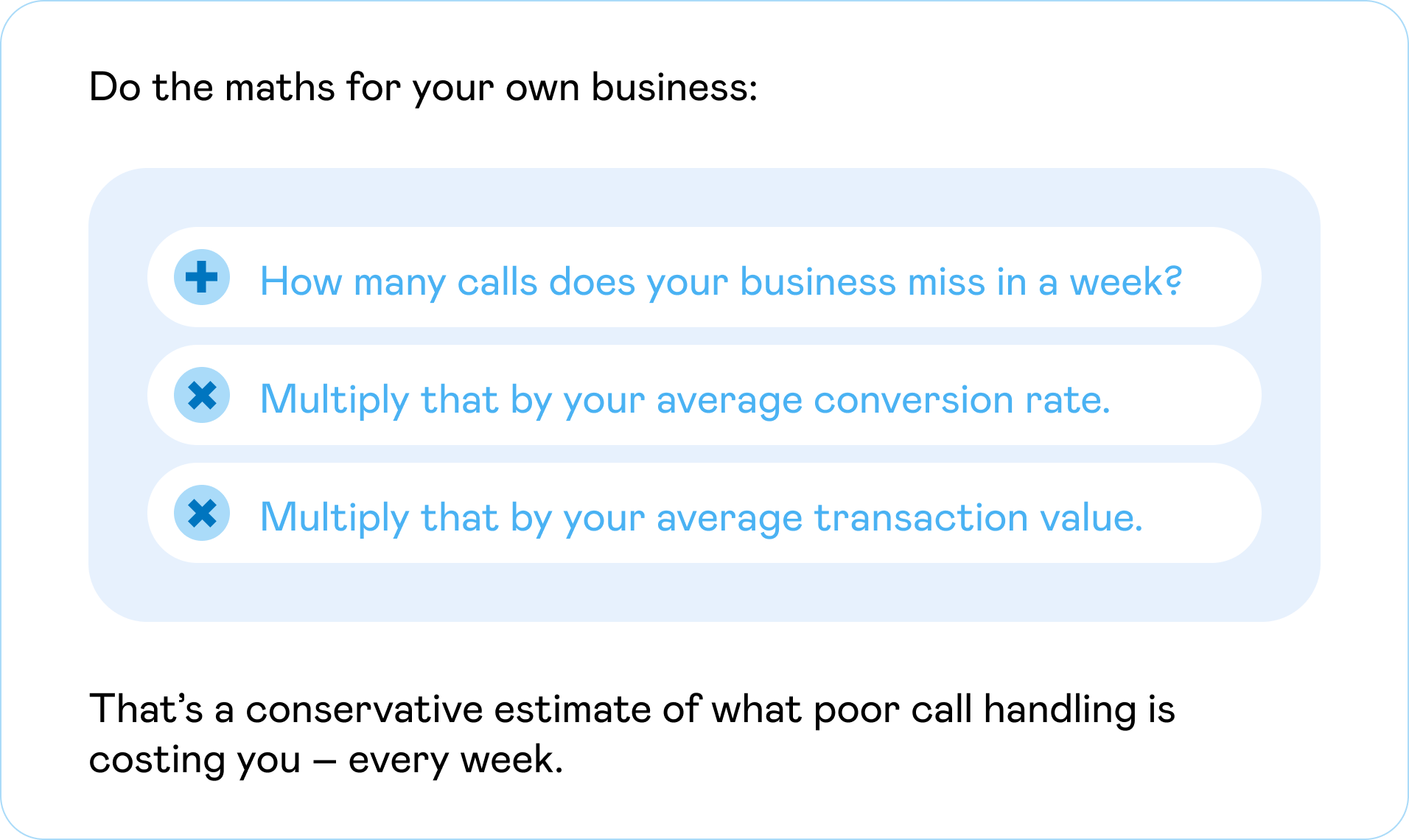
Zoom out and the number becomes systemic. Qualtrics XM Institute forecasts that poor customer experiences will put nearly $3 trillion of global sales at risk in 2026. For an SMB, it doesn’t feel like $3 trillion. It feels like a quiet Tuesday where three calls went to voicemail and the team was too busy to notice.
What’s happening to those customers?
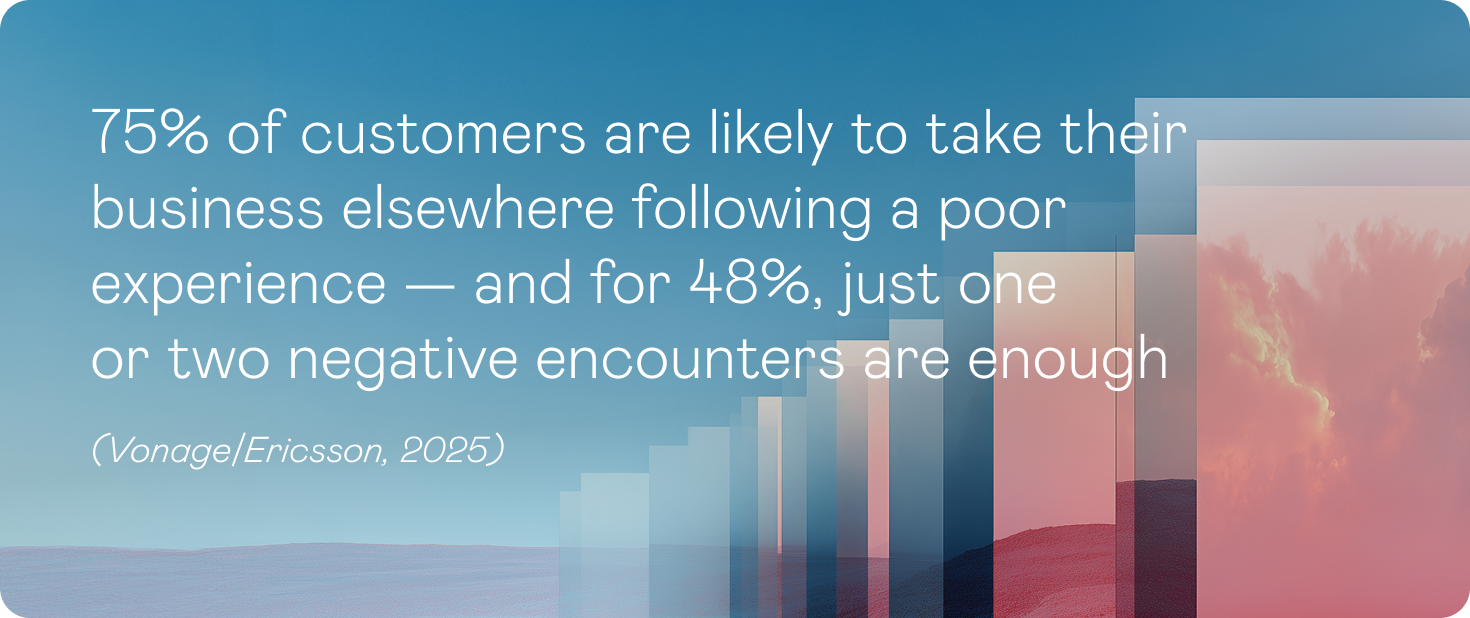
They’re not waiting. They’re switching – and they don’t always come back.
The customer does not need to be furious. Mildly unimpressed is enough.
Your brand isn’t just your logo, website or social feed. It’s how your business sounds and feels when someone tries to reach you. Salesforce found that 80% of customers say the experience a company provides is as important as its products and services. Your communication isn’t a support function – it’s part of what you’re selling. Every time someone struggles to reach you, that perception takes a hit.
What does “good” look like?
It’s a challenge our partners at GoTo – one of the world’s leading cloud communications and IT platforms – see across thousands of businesses every day.
As Olga Lagunova, Chief Innovation and Technology Officer at GoTo, puts it:
“Businesses today are inundated with fragmented and costly capabilities and tools, often not knowing where to begin when it comes to optimizing their customer experience.”
That confusion is costing businesses more than they realize. If you’re going to close the gap, you need something concrete to aim for. Here are the benchmarks that matter:
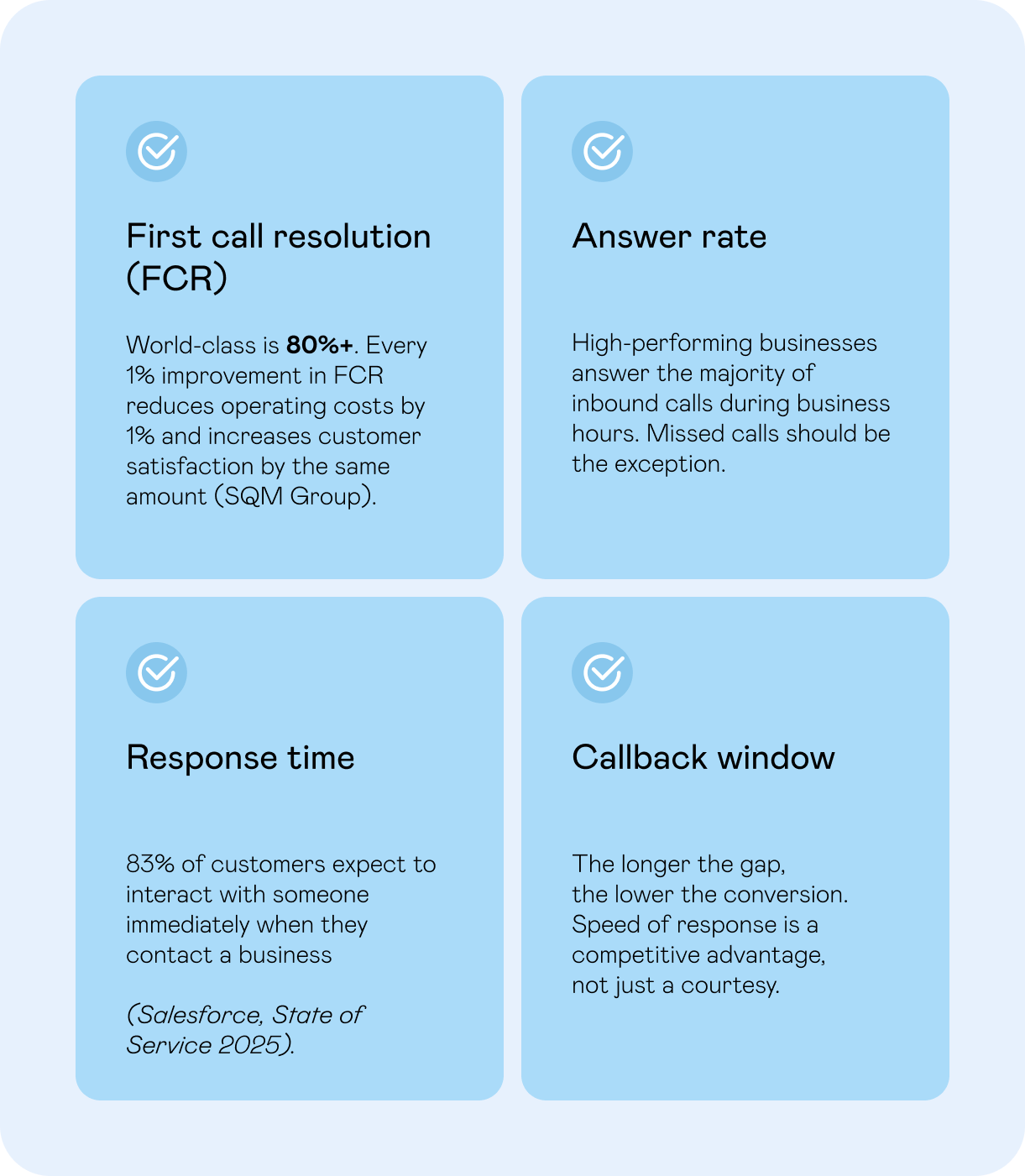
Companies that get this right don’t just sound better – they perform better. Companies that grow faster generate 40% more of their revenue from personalized, consistent communications than those growing more slowly (McKinsey, 2021).
The gap between good and poor communication isn’t marginal. It’s measurable, and it compounds.
Where to start.
Most businesses track their marketing spend, website traffic and lead volumes carefully. Fewer track what happens when someone tries to get in touch.
As Lynda Wieland, our Director of Client Technology Services, explains:
“We’ve spent over 25 years working with businesses, and across almost 40,000 clients, we’ve seen first-hand how everyday communication shapes whether businesses win or lose customers.”
That’s exactly the gap PHMG was built to close.
The first step is knowing where your gaps are – answer rates, call handling, first contact resolution, how quickly your team responds. From there, the improvements are often more straightforward than businesses expect.
At PHMG, we help businesses make every customer interaction work harder, combining creative expertise, innovative technology and strategic support to close the gap between the experience you intend to deliver and the one customers actually receive.
Because in 2026, growth will not just belong to the businesses that get people interested. It will belong to the ones that turn that interest into clear, consistent and confident customer experiences.
Find out where your communication experience could be working harder.
Already a client?
New to PHMG?

Sources:
- Qualtrics XM Institute, State of Customer Experience (2025) https://www.qualtrics.com/articles/customer-experience/3-trillion-risk-due-bad-customer-experiences-2026/
- Vonage/Ericsson, Global Customer Engagement Report https://www.vonage.com/resources/publications/global-customer-engagement-report/
- Invoca, The Invoca Call Conversion Industry Benchmarks Report (2025)
https://www.invoca.com/reports/the-invoca-call-conversion-industry-benchmarks-report-2025 - Invoca, Invoca Launches New Solution to Recover Revenue from Missed Sales and Appointment-Setting Calls (2021)
invoca.com/press-release/invoca-launches-new-solution-to-recover-revenue-from-missed-sales-and-appointment-setting-calls - Salesforce, State of the Connected Customer (2025) https://www.salesforce.com/resources/research-reports/state-of-the-connected-customer/
- SQM Group, First Call Resolution Benchmarking Study (2021) https://www.sqmgroup.com/resources/library/blog/FCR-benchmarking-industry-results-2021
- McKinsey & Company, The Value of Getting Personalisation Right (2021)
https://www.mckinsey.com/capabilities/growth-marketing-and-sales/our-insights/the-value-of-getting-personalization-right-or-wrong-is-multiplying
Related insights
Trends & opinion
The future of brand voice: Look good, sound better
Businesses can communicate across more channels than ever before: multi-format advertising, social media, video, telephony, virtual assistants and, increasingly, AI-powered customer interactions. Voice is no …
Trends & opinion
Five ways to make your communications smarter, without losing the human touch
So where does AI create the most value for you? Here are five areas worth considering. 1. Give a better first impression Every customer journey …
Trends & opinion
AI in business comms: What’s actually happening right now?
One thing I’ve noticed recently is that many businesses still see AI as something they’ll get around to eventually. The thing is, they’re already using …