


14 August 2026
Five ways to make your communications smarter, without losing the human touch
In our previous article, PHMG's CTO, Chris Thacker, explored how AI is already becoming part of the tools businesses use every day.
Like many of our clients, we're continuing to work out where AI can add the most value. Customer communications are an interesting place to start, as every interaction shapes the experience someone has with your brand.
At PHMG, we're on that journey too. We're exploring how AI can help our teams work efficiently, communicate consistently and spend more time building valuable client relationships.
So where does AI create the most value for you? Here are five areas worth considering.
1. Give a better first impression
Every customer journey starts somewhere. It might be a phone call during a busy Monday morning or an online enquiry after your team has logged off.
The channel changes, but the expectation doesn’t. People want a response and, increasingly, they expect it quickly.
This is one area where AI could make a difference – especially in the form of a virtual assistant:
- An AI receptionist can answer the calls you don’t get to, greeting people professionally, handling routine enquiries and directing callers to the right person.
- An out-of-office AI assistant can pick up enquiries after hours, so the person who got in touch at 10pm has a friendly reply waiting, rather than silence until Monday.

What we’ve seen is that tools like these can contribute to a stronger first impression, fewer missed opportunities and customers feeling looked after from the moment they get in touch.
Every business is different, but the goal is the same: using AI to make every interaction feel fast, consistent and professional without replacing the human connection.
2. Make every message feel personal
Customers increasingly expect businesses to understand who they are, what they need and where they are in the journey. They may not expect you to know everything, but they do expect your communications to feel relevant.
We’ve all felt the difference. The email that clearly went to ten thousand people at once, and the one that feels like it was written for you.
One gets deleted and the other gets remembered.
That’s one area where we’re looking at solutions AI could offer. Rather than firing the same generic message to everyone, it can personalise emails, recommend relevant products and tailor content based on customer behaviour, interests, company size or where someone is in their journey with you.
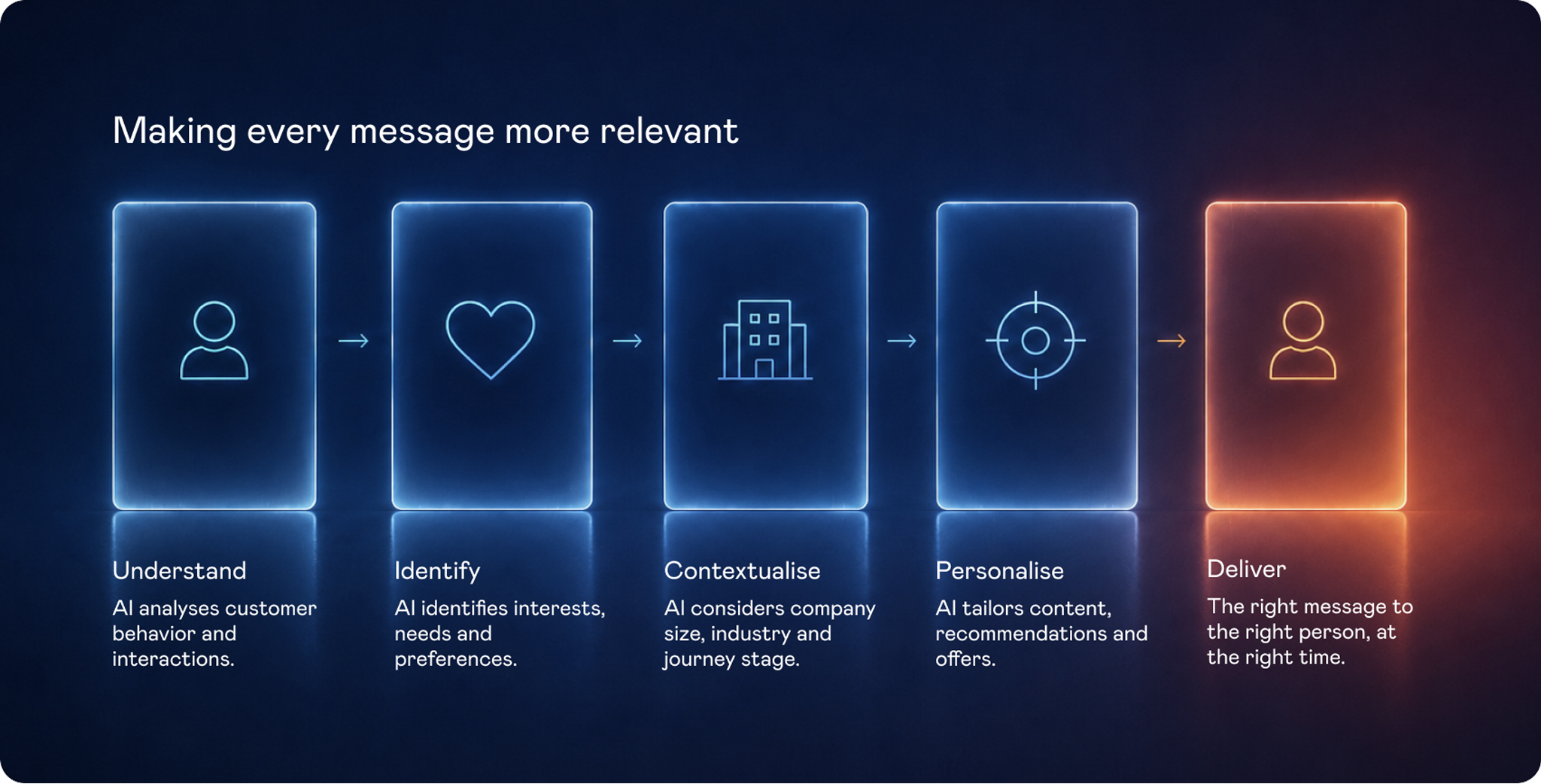
If someone only buys sweatshirts and T-shirts, they probably don’t want to see trousers promoted to them. Relevant communication can help people feel understood and strengthen the relationship between a customer and a business.
3. Help your team focus on what matters
Growing businesses often face the same challenge. Customer expectations continue to rise, but hiring another team member isn’t always an option.
AI has the potential to reduce some of that pressure by handling repetitive enquiries, summarising previous conversations, suggesting responses and helping route requests to the right person more quickly.
Instead of starting every conversation from scratch, AI can highlight that this is a customer’s second enquiry about the same issue and suggest a response they can adapt in seconds.
For straightforward, high-volume requests such as password resets, delivery updates or billing queries, AI can often resolve them from start to finish without needing a member of your team to step in.

Rather than thinking about AI as a replacement for people, we’re more interested in how it could give them additional time to solve complex problems, build relationships and deliver the kind of service customers remember.
The goal isn’t necessarily fewer conversations, but better ones.
4. Deliver the same voice, on every channel
For a growing business, the hard part often isn’t creating great communication. It’s creating it consistently.
Tone of voice is one of the most overlooked parts of your brand identity. It’s easy to get it right on your website, but much harder to maintain across every other interaction your customers have with your business. Those small inconsistencies soon add up.
A business that feels warm and approachable in one place can come across as distant or generic in another, and customers notice the difference, even if they can’t quite put their finger on why.
Your website, emails, social channels and phone experience should all feel like the same business.

We’re also exploring how AI could help with:
- Drafting content so nothing goes out sounding off-brand or rushed.
- Speeding up routine communications without losing the tone that makes you, you.
- Spotting customers going quiet and flagging the chance to reach out before the relationship drifts.
And with a human keeping an eye on it, there’s the potential to combine greater consistency with the personality that made customers choose you in the first place.
Consistency is really about trust. And trust is what keeps customers coming back.
5. Protect the human moments that matter
One of the most interesting things we’re learning about AI is that its value doesn’t have to come from replacing human interaction. In many cases, it can help create more space for it.

The moments your customers remember most often aren’t the routine ones. They’re the conversations that solve a problem, build trust or make someone feel genuinely understood.
Used thoughtfully, AI can create more time for those moments. It can allow your team to focus on the conversations that strengthen relationships and deliver the kind of experience customers remember.
Technology can support the conversation. Your people are what make it meaningful.
The right technology, in the right places
AI is moving quickly, and businesses everywhere are working out what it means for them. Rather than adopting it for the sake of a trend, the opportunity is to explore where it can create genuine value – from responding faster to giving teams more time for meaningful conversations.
That shift is already underway.
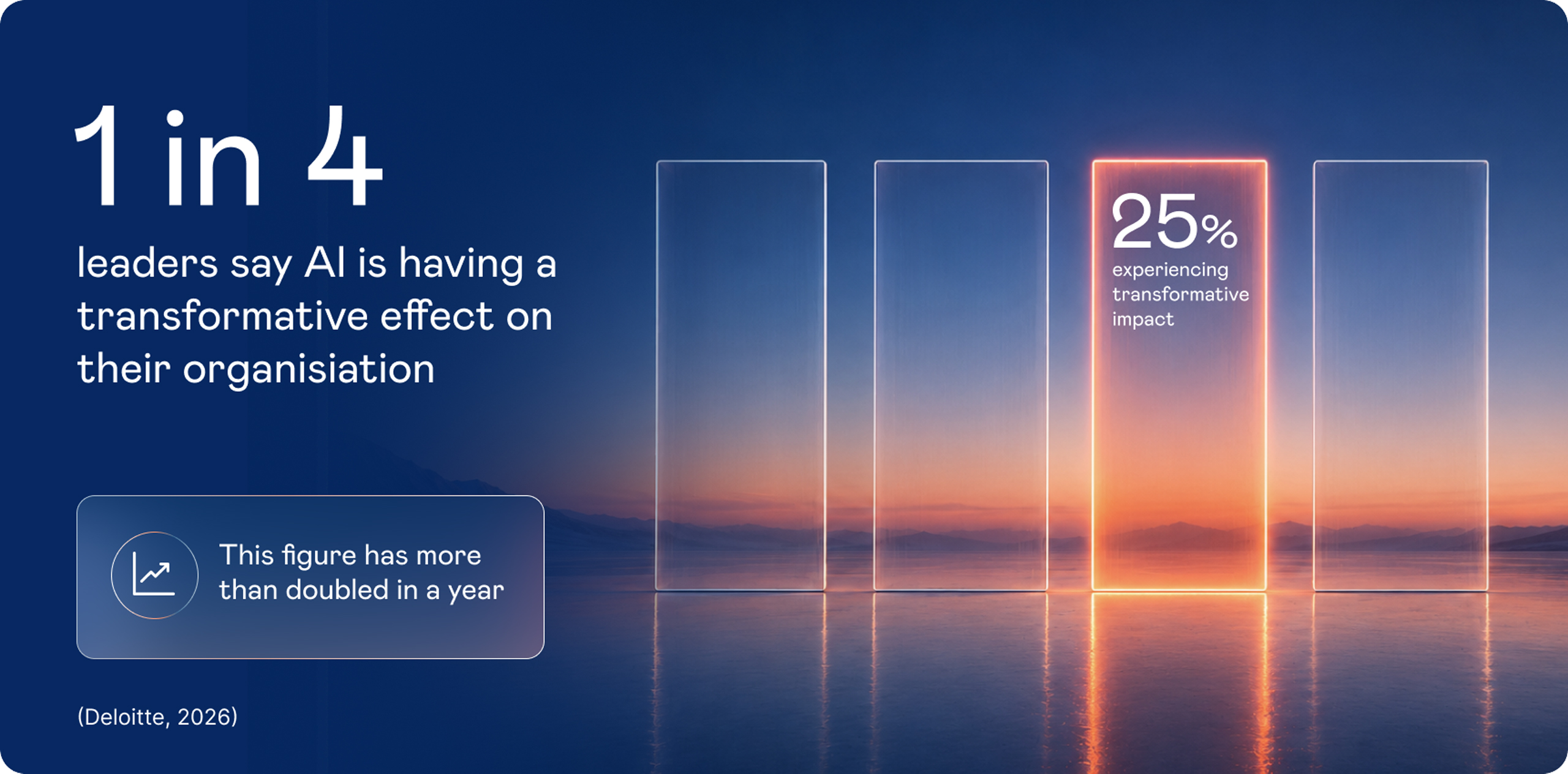
At PHMG, we’re on that journey alongside our clients. We’re continuing to test, learn and explore how AI can improve the way we support businesses and the experiences we deliver.
The opportunity is to use AI where it makes sense, while keeping the human connection at the centre of every experience.
Whilst AI may give businesses more time to focus on what matters, what you do with that time is what your customers will remember.
Wondering where AI could make the biggest difference?
Already a client?
New to PHMG?

Sources:
-
ElectroIQ, AI Customer Service Statistics by Market Size, Region and Facts, 2025
https://electroiq.com/stats/ai-customer-service-statistics/
-
Deloitte, State of AI in the Enterprise, 2026
https://www.deloitte.com/us/en/about/press-room/state-of-ai-report-2026.html
Related insights
Trends & opinion
The future of brand voice: Look good, sound better
Businesses can communicate across more channels than ever before: multi-format advertising, social media, video, telephony, virtual assistants and, increasingly, AI-powered customer interactions. Voice is no …
Trends & opinion
Five ways to make your communications smarter, without losing the human touch
So where does AI create the most value for you? Here are five areas worth considering. 1. Give a better first impression Every customer journey …
Trends & opinion
AI in business comms: What’s actually happening right now?
One thing I’ve noticed recently is that many businesses still see AI as something they’ll get around to eventually. The thing is, they’re already using …