


28 May 2026
Customer intent is expensive to win. Don’t lose it in the customer journey.
Small businesses are under more pressure than ever to respond quickly, keep customers happy and make every call count.
But many are still held back by outdated phone systems, missed calls and poor call routing.
By moving to smarter cloud-based communications, businesses can answer faster, route customers to the right people and create a smoother experience today, while building the foundation for the AI tools that will shape customer communication tomorrow.
Two changes that turn your phone system into a revenue driver.
In our previous article, The quiet cost of poor customer communications in 2026, we explored how small communication failures quietly damage revenue and customer trust.
After more than 25 years working with businesses on their communication systems, one pattern stands out above all others – the most damaging problems are rarely the obvious ones. They’re the dropped call that wasn’t logged. The routing menu that sends customers in circles. The hold queue nobody thought to measure.
The customer experience those moments create is invisible to most businesses – but not to their customers. 74% of customers will take their business elsewhere after poor experiences (Vonage/Ericsson, 2025). These failures rarely feel catastrophic internally. Externally, customers notice immediately. The call that drops mid-sentence. The hold music that loops three times. The voicemail that never gets returned.
For many SMBs, improving the customer experience starts with systems that match how people live and work now.
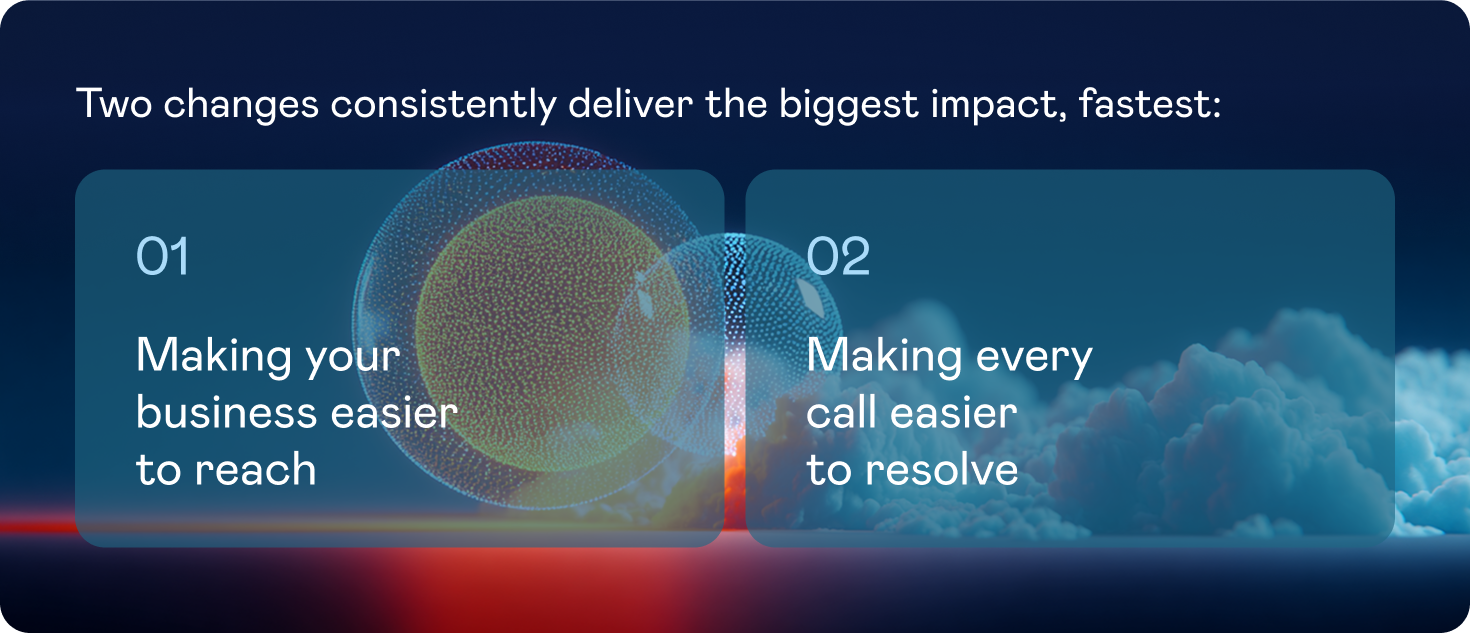
The first change: Invest in a modern phone system
Many SMBs are still running on communication infrastructure built for a world that no longer exists.
Customers can order dinner, book a taxi, check their bank balance and track a parcel before the kettle has boiled. So when they call a business and hit long waits, dead ends or disconnected teams, it doesn’t feel like a minor operational issue. It feels like the business is running at yesterday’s pace.
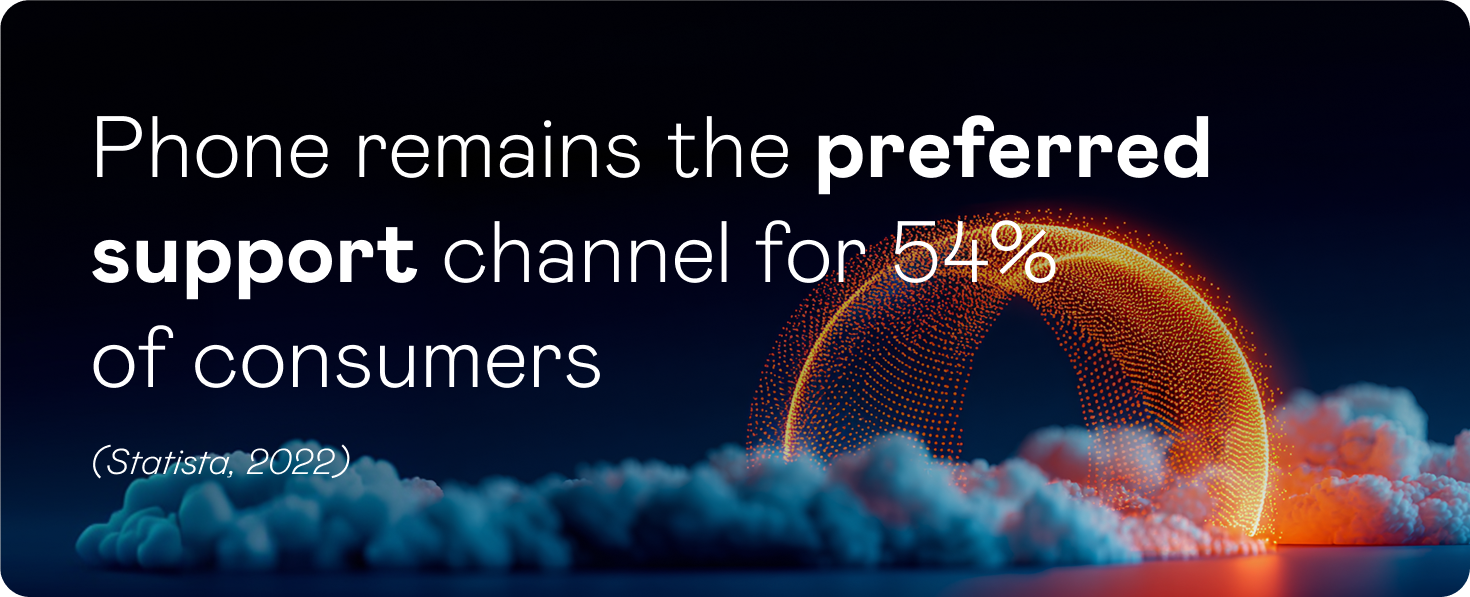
That matters more than ever when phone remains the preferred support channel for 54% of consumers (Statista, 2022) – and when the underlying technology is being retired whether businesses are ready or not.
Legacy systems vs. cloud communications
What legacy infrastructure often looks like
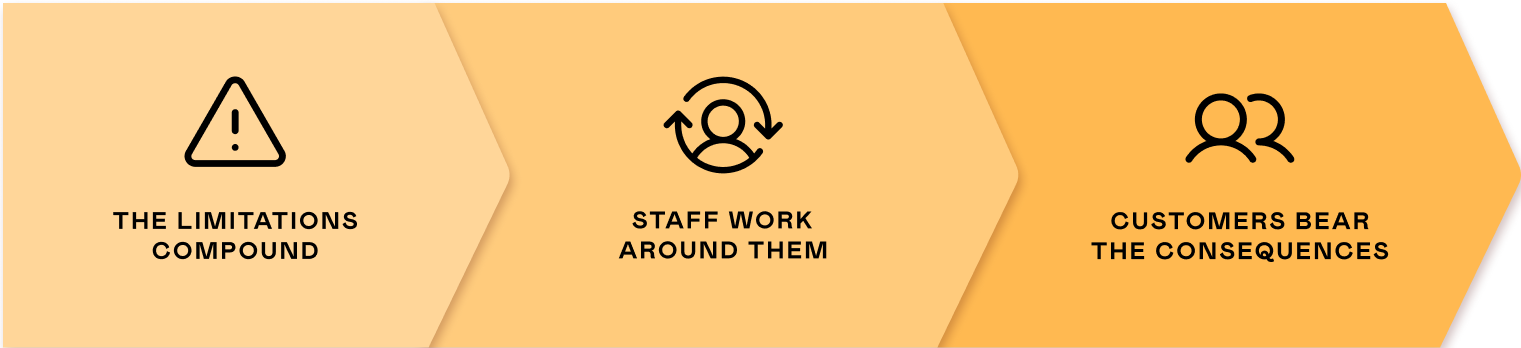
Most businesses with ageing phone systems don’t think of them as a problem – they think of them as just how things are. The hardware works, mostly. Calls connect, mostly. Staff have learned the workarounds. But the cumulative effect on the customer experience is significant:
- Dropped calls and unreliable connections
- Remote or hybrid staff disconnected from office systems
- No meaningful call reporting or analytics
- Separate, siloed platforms for calls, messaging and meetings
- A CRM that has never spoken to the phone system
- Slow, manual provisioning every time a staff member joins or leaves
What modern cloud telephony changes
Businesses are increasingly adopting Unified Communications as a Service (UCaaS) – a cloud-delivered model that brings together voice calls, video conferencing, instant messaging, file sharing and contact centre tools within a single platform, accessible from any device, anywhere.
Rather than running separate systems for phone, video and team messaging – each with its own licence, provider and maintenance overhead – UCaaS consolidates everything under one roof.
For SMBs, the practical impact is immediate: HD-quality calls from any location, real-time dashboards, CRM integration on every call, and hybrid working built in as standard. Scaling up no longer means ordering hardware weeks in advance.
The direction of travel is clear:
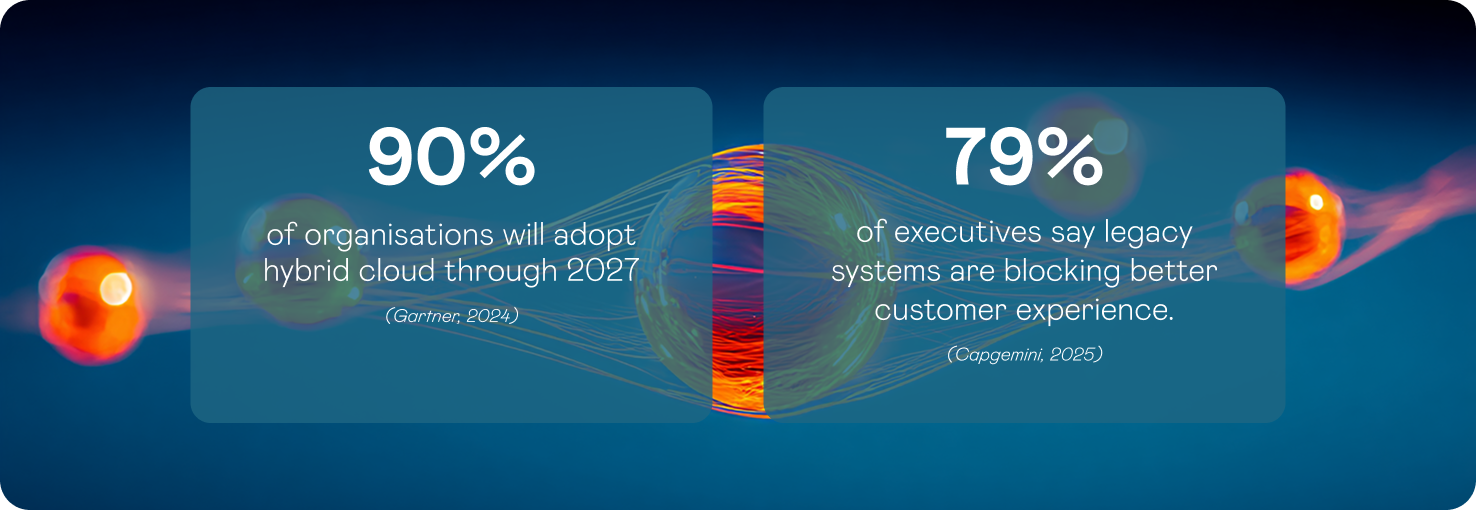
The results modern communications can deliver
Investing in cloud communications is not just about replacing old hardware. It’s about improving flexibility and responsiveness at every stage of the customer journey.
One of the most common reasons businesses delay upgrading is the assumption that switching will be disruptive – that it means downtime, complexity and a steep learning curve. In practice, with the right partner, the transition is far smoother than most expect.
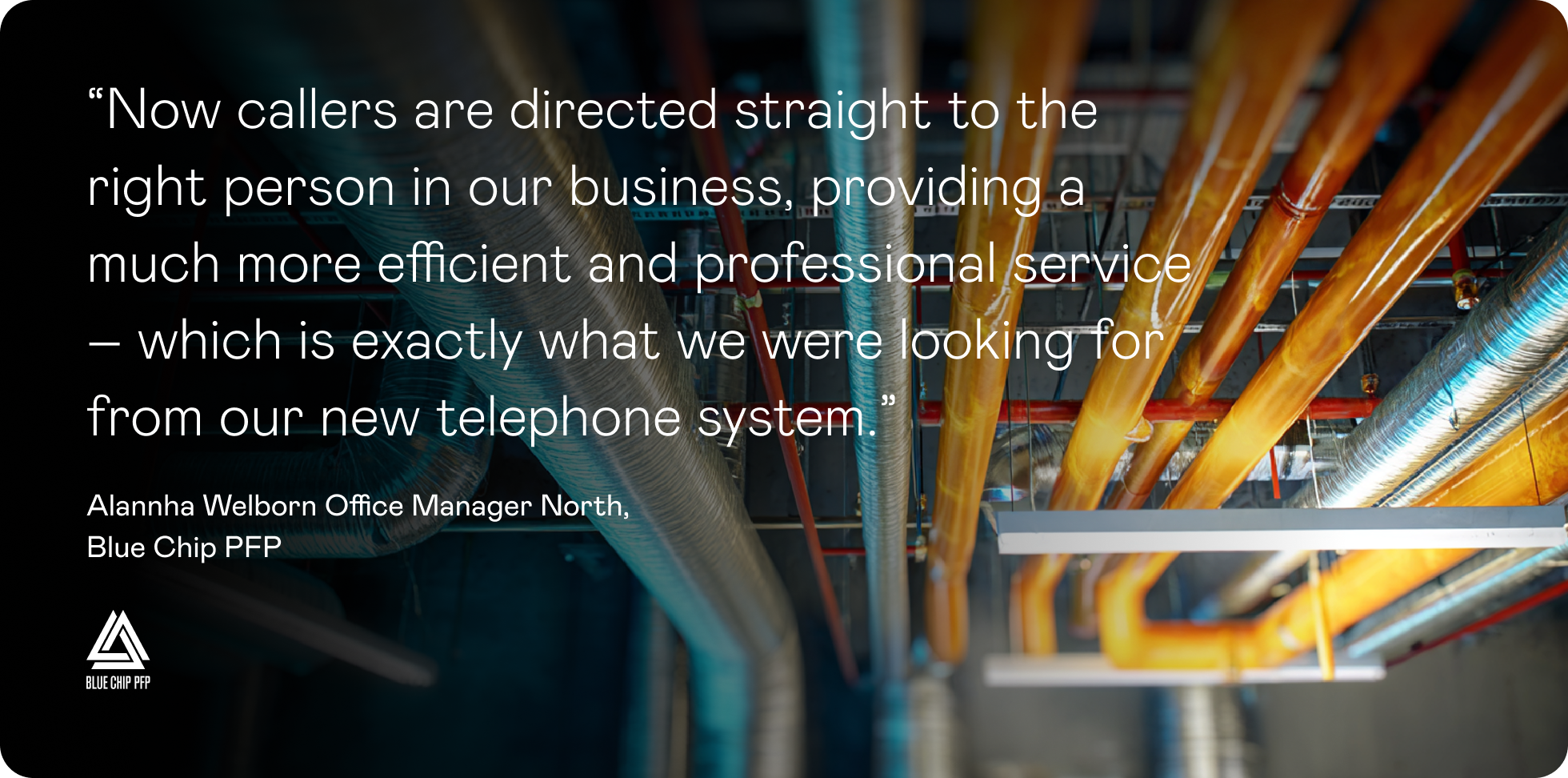
That is why PHMG works with providers like GoTo Connect. Together, they supported Blue Chip PFP in developing a significantly improved telephone system, combining cloud telephony with call management, dial plans, and professional audio branding – delivering faster routing, a more professional caller experience, and a system the team could actually rely on.
The second change: Optimise your call routing
Getting calls answered is only half the battle. Where they go next is where businesses win or lose.
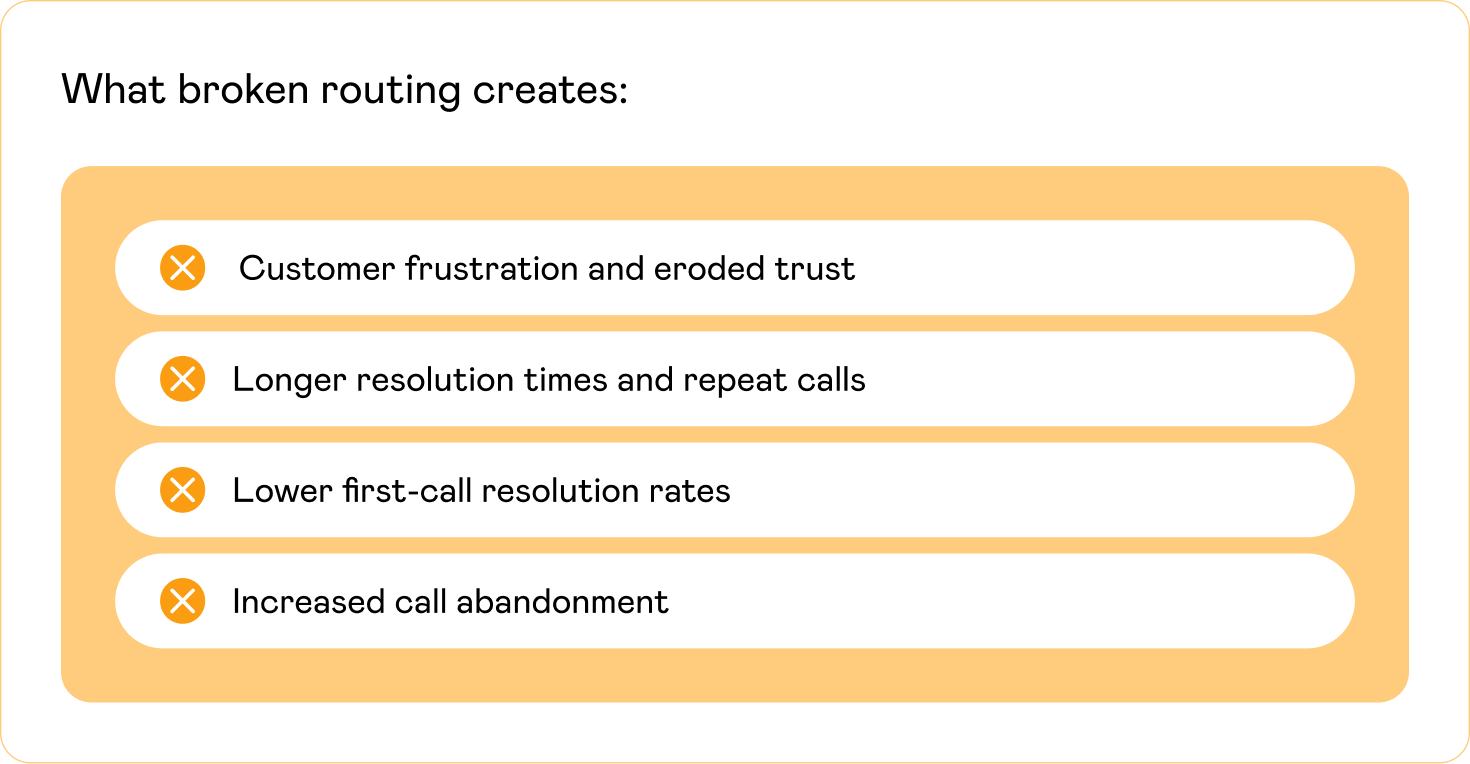
It’s a pattern that appears time and again – a business invests in modern telephony infrastructure, but the call flow underneath it is broken. Customers reach the wrong person. They’re placed on hold unnecessarily. They repeat themselves to multiple agents and give up. The system works. The experience doesn’t.
It’s the equivalent of a well-signposted road that leads to a car park with no exit. The infrastructure is there. But without intelligent routing on top of it, customers still end up lost.
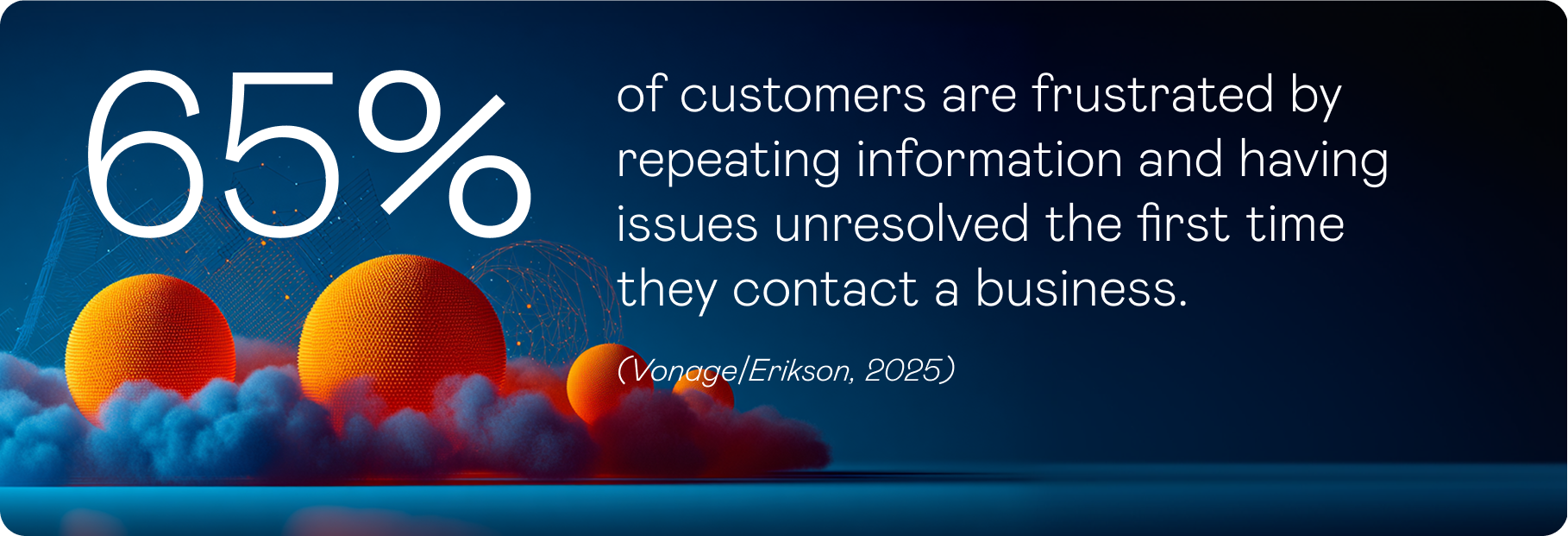
These are no longer minor frustrations. They’re moments when customers quietly decide they’re done.
Customers whose problems are resolved quickly are 2.4x more likely to stay loyal to a brand (Forrester, 2021). Customers are willing to pay up to 16% more for a superior experience (PwC, 2018) – and 29% have already stopped buying from a brand entirely due to poor customer experience (PwC, 2025).
The routing problem isn’t just about efficiency. It’s about revenue.
Broken call flows vs. optimised routing
This is where PHMG’s Complete Caller Experience (CCE) makes a decisive difference.
Think of GoTo Connect as the road – it gives every call a reliable, high-quality route into the business. CCE is the signage, lighting and direction that ensures customers don’t get lost along the way. Together, they deliver something neither does alone – a customer journey that works from first ring to resolution.
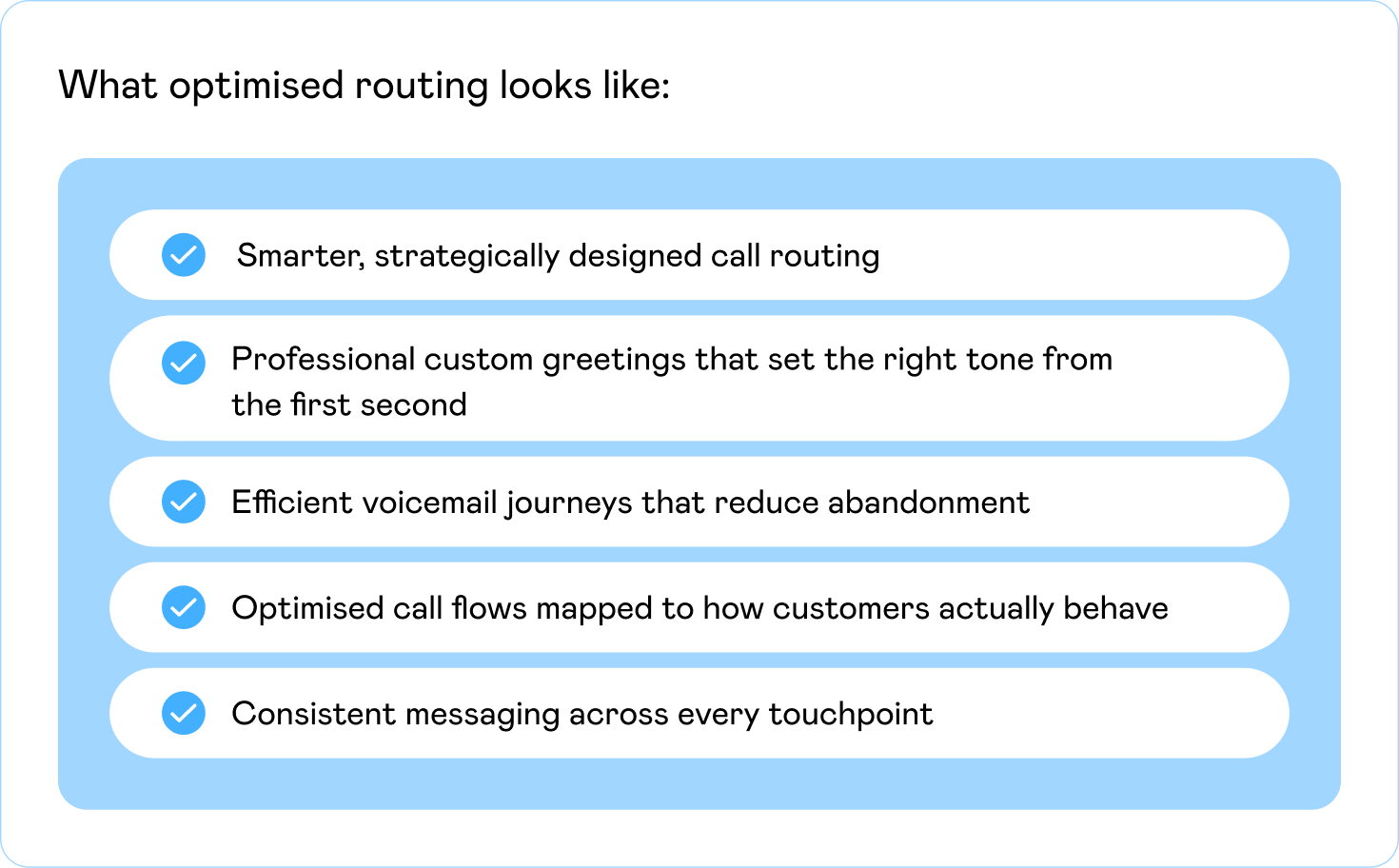
The goal is simple: every call reaches the right person and makes the right impression, first time.
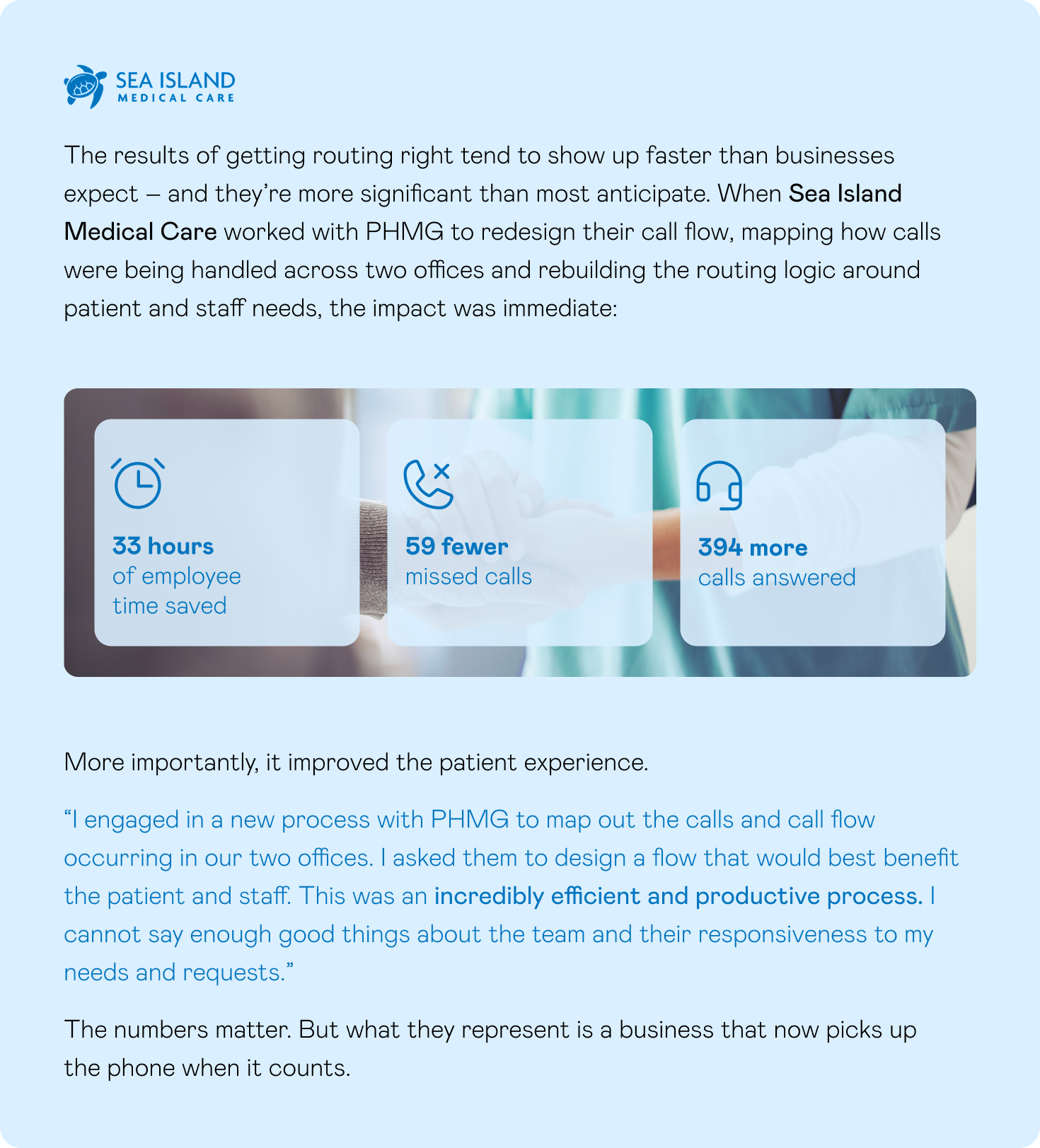
Case study: The measurable impact of better routing
What comes next: AI-powered customer communications
And this is before even considering the impact AI is already having – and will continue to have – on making all of this smarter, faster and more powerful.
AI will make communication faster, but not automatically better. The businesses that benefit most will be the ones that have already built the right foundations – reliable infrastructure, intelligent routing, and a clear understanding of where their customer experience breaks down.
That is why cloud communications and smarter routing matter now. They don’t just fix today’s problems – they create the conditions for AI-enhanced customer experiences that become more intelligent without becoming less human.
Because the businesses that win will not just generate demand. They will know exactly what to do with it when it calls.
Learn how GoTo Connect helps businesses communicate smarter →
Explore how CCE creates smoother customer experiences →
Already a client?
New to PHMG?

Sources:
- Vonage/Ericsson, Global Customer Engagement Report (2025) https://www.vonage.com/resources/publications/global-customer-engagement-report/
- Forrester, What’s the ROI of CX Transformation? (2021) https://www.forrester.com/blogs/whats-the-roi-of-cx-transformation/
- PwC, Customer Experience Survey (2025) https://www.pwc.com/us/en/services/consulting/commercial-excellence/library/2025-customer-experience-survey.html
- PWC, “Experience is everything: Here’s how to get it right” (2018) https://www.pwc.com/ng/en/assets/pdf/experience-is-everything.pdf
- Capgemini Research Institute, Customer Service Transformation (2025) https://www.capgemini.com/wp-content/uploads/2025/03/Final-Web-Version-Report-Customer-Service-Transformation.pdf
- Gartner, Worldwide Public Cloud End-User Spending Forecast (2024) https://www.gartner.com/en/newsroom/press-releases/2024-11-19-gartner-forecasts-worldwide-public-cloud-end-user-spending-to-total-723-billion-dollars-in-2025
- Statista, Preferred Customer Service Channels (2022) — https://www.statista.com/statistics/818566/preferred-channels-customer-service-issues-united-states/
Related insights
Trends & opinion
The future of brand voice: Finding your voice
Broadly speaking, there are three types of voice that a business can use and adopt: Each is distinctively unique and suited to different environments – …
Trends & opinion
The future of brand voice: Look good, sound better
Businesses can communicate across more channels than ever before: multi-format advertising, social media, video, telephony, virtual assistants and, increasingly, AI-powered customer interactions. Voice is no …
Trends & opinion
Five ways to make your communications smarter, without losing the human touch
So where does AI create the most value for you? Here are five areas worth considering. 1. Give a better first impression Every customer journey …